
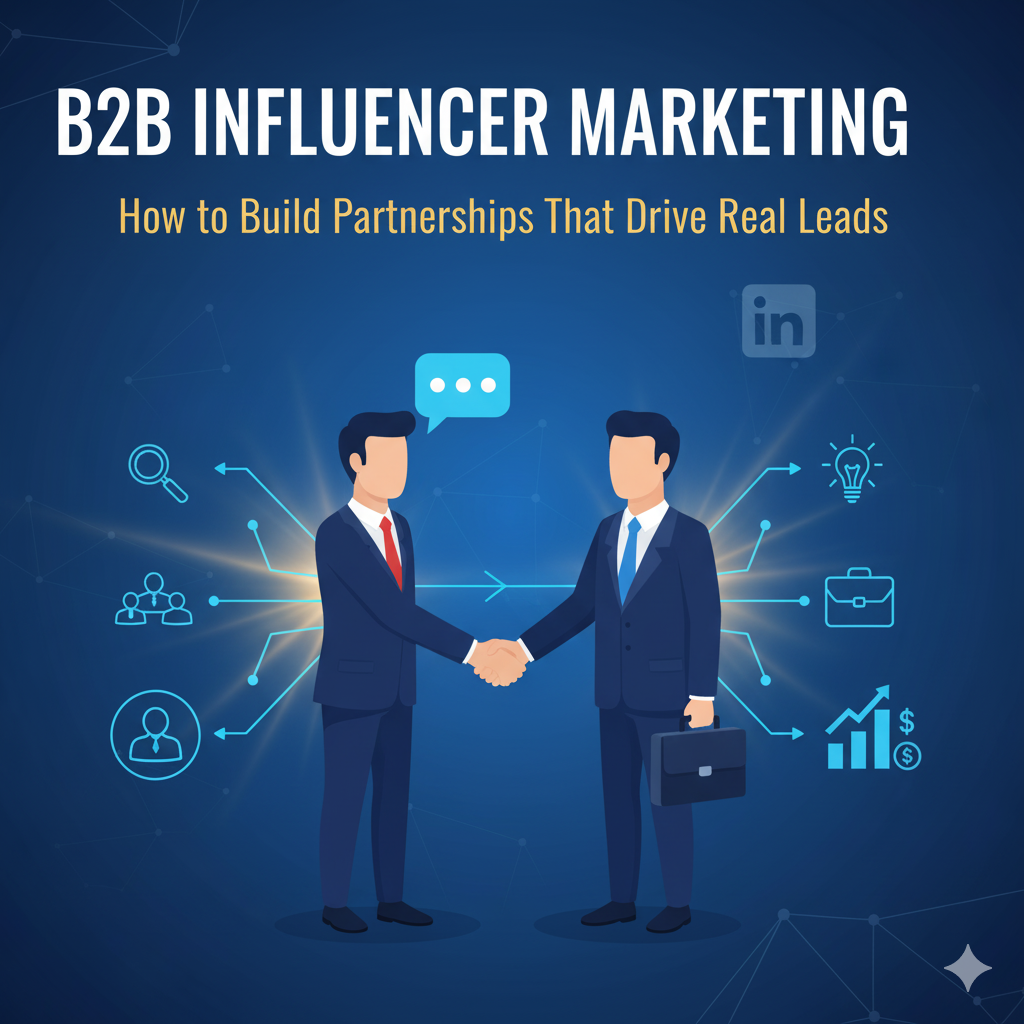
When most people think of influencer marketing, they picture beauty brands on Instagram or viral TikTok trends. But in 2025, influencer marketing has gone corporate — and it’s delivering serious ROI for B2B brands.
From SaaS founders posting on LinkedIn to niche podcast hosts shaping industry opinion, B2B influencer marketing isn’t about hype — it’s about credibility, relationships, and trust.
Here’s how to build partnerships that move beyond likes and clicks — and actually drive qualified leads.
1. Redefine What “Influencer” Means in B2B
In B2B, influence doesn’t always come with millions of followers. It’s about subject matter authority and audience trust.
Your ideal influencer might be:
- A respected LinkedIn thought leader in your industry
- A YouTube educator who reviews software and tools
- A podcast host with a loyal B2B listener base
- An industry analyst or consultant with decision-maker reach
The sweet spot? Micro-influencers (10K–100K followers) who engage deeply with niche audiences — think IT managers, procurement officers, or CFOs — not mass consumer crowds.
2. Align Influencer Goals with Your Sales Funnel
Before you sign a deal or send a contract, define where influencers fit in your marketing funnel:
- Top of Funnel (Awareness): Partner with influencers for brand storytelling, webinars, or product explainers to get your name out there.
- Mid-Funnel (Consideration): Collaborate on case studies, demo reviews, or joint content that educates and builds credibility.
- Bottom of Funnel (Conversion): Use influencer-led testimonials or referral programs to convert interested prospects into customers.
👉 Pro tip: B2B buyers don’t impulse-buy. Your influencer content should guide them through multiple touchpoints, not push a one-time sale.
3. Find the Right Influencers — Using Data, Not Guesswork
Skip vanity metrics like follower counts. Instead, assess influencers by:
- Audience Fit: Do they reach your ICP (ideal customer profile)?
- Engagement Quality: Do they start meaningful discussions or just collect likes?
- Content Alignment: Does their tone, expertise, and values match your brand?
- Conversion Potential: Have they successfully driven event signups, demo requests, or newsletter subscriptions before?
Tools like Tagger, Upfluence, or SparkToro can help uncover influencers with real B2B clout — but don’t underestimate manual outreach on LinkedIn and Twitter/X.
4. Build Relationships Before Campaigns
You can’t “cold DM” your way into authentic influence. B2B influencers value long-term partnerships built on mutual respect and shared goals.
Start by:
- Engaging with their posts consistently (comment, share, add value).
- Featuring them in your brand’s content first (e.g., “Top 10 Experts to Follow in [Industry]”).
- Inviting them to co-create — not just “promote” — content.
When influencers feel like collaborators instead of contractors, their advocacy becomes authentic — and their audience notices.
5. Co-Create Thought Leadership, Not Just Ads
B2B buyers can smell a sales pitch a mile away. Instead of forcing product placements, co-create value-driven content:
- Webinars or Live Panels: Collaborate on industry trends or problem-solving discussions.
- Whitepapers or eBooks: Include influencer insights alongside your brand’s data.
- Video or Podcast Series: Let influencers host or interview your subject matter experts.
- LinkedIn Articles or Newsletter Features: Blend your expertise with their network reach.
The goal? Position your brand as a trusted partner in industry conversations — not just a vendor.
6. Track What Actually Matters
To prove ROI, focus on lead-driving metrics, not vanity numbers.
Track:
- Referral traffic from influencer content to your site or landing pages.
- Form submissions or demo requests tied to unique influencer URLs or codes.
- Event registrations or webinar sign-ups from influencer promotion.
- CRM attribution — connect influencer activity to pipeline movement.
Use UTMs, CRM tagging, and attribution modeling to link influencer touchpoints with lead generation and sales outcomes.
👉 Example: If an influencer’s post leads to 50 webinar signups and 10 product demos, you can directly measure the ROI of that partnership.
7. Scale with Advocacy, Not Dependence
The best B2B influencer programs turn influencers into advocates — people who continue to talk about your brand long after the campaign ends.
Ways to build ongoing momentum:
- Develop brand ambassador programs for long-term collaborations.
- Host exclusive influencer roundtables or events to strengthen relationships.
- Provide early product access or co-marketing opportunities that reward loyalty.
When influencers become part of your ecosystem, they evolve into community leaders, amplifying your brand across every channel they touch.
Final Thoughts
B2B influencer marketing isn’t about chasing trends — it’s about building trust at scale.
By partnering with credible voices who understand your audience and industry, your brand can bridge the gap between awareness and conversion, turning thought leadership into tangible leads.The future of B2B influence belongs to brands that collaborate with experts, not advertisers.
