
Understanding Modern SEO in 2026
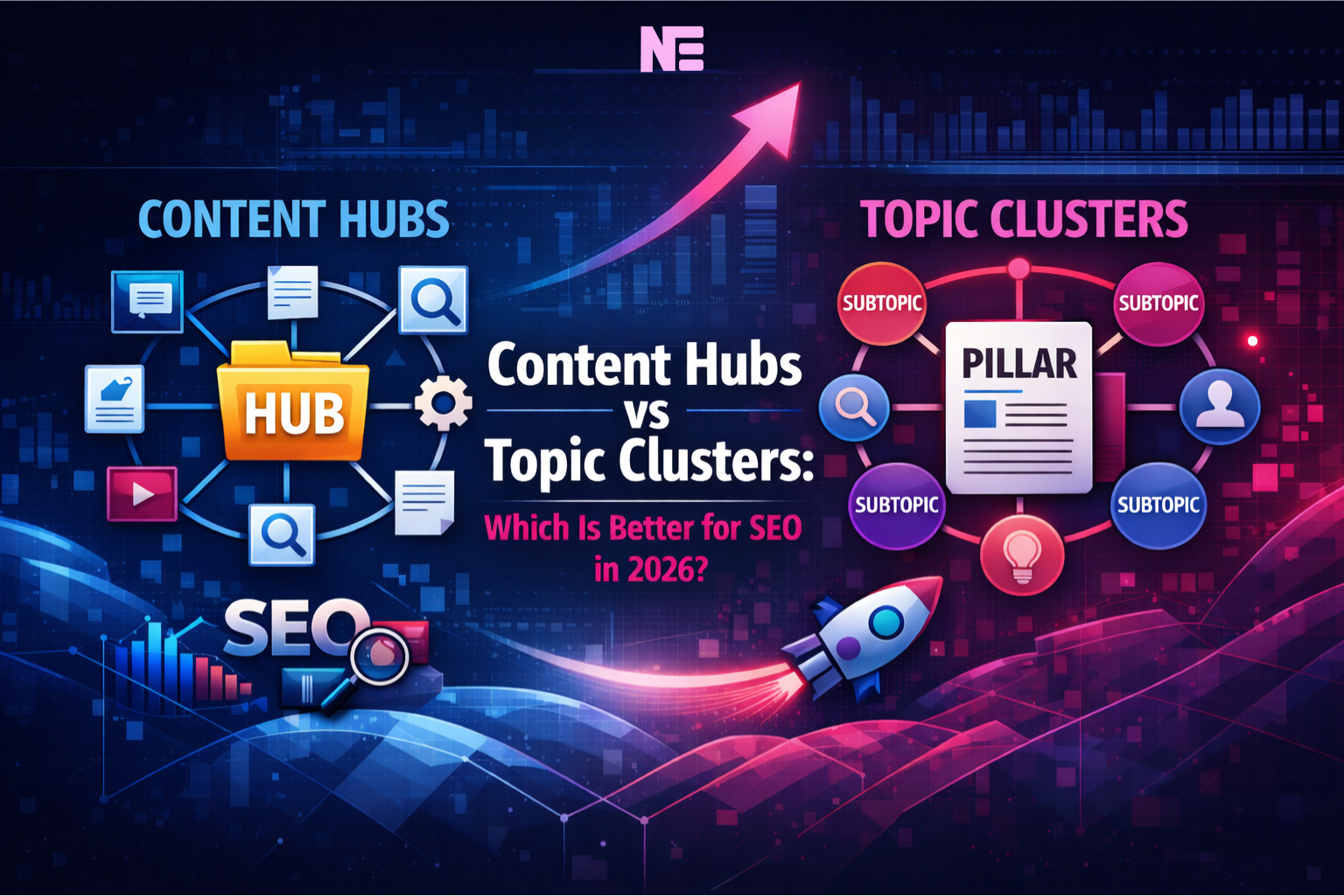
SEO in 2026 is no longer about isolated keywords or publishing content at scale without structure. Search engines like Google now rely heavily on semantic understanding, topical authority, and user satisfaction signals. This evolution has made structured content strategies essential, pushing marketers toward models such as Content Hubs vs. Topic Clusters.
How Search Engines Interpret Topical Authority
Topical authority refers to how comprehensively and consistently a website covers a subject area. Rather than ranking single pages, search engines evaluate content ecosystems. Websites that demonstrate depth, logical structure, and strong internal linking are rewarded with higher visibility.
Role of AI, Semantic Search, and User Intent
AI-driven algorithms analyze relationships between concepts, not just keywords. That means your content must answer why, how, and what next. Both content hubs and topic clusters aim to satisfy this requirement—but they do so in different ways.
What Are Content Hubs?
Definition and Core Structure
A content hub is a centralized resource center built around a broad topic. It acts as a destination page that links out to multiple related subtopics, tools, guides, and media formats.
Pillar Pages Explained
Pillar pages in content hubs are often evergreen, long-form assets that provide a high-level overview while guiding users to deeper resources.
Supporting Content Assets
These may include blog posts, videos, whitepapers, case studies, and FAQs—all connected through clear navigation rather than aggressive keyword-focused links.
SEO Benefits of Content Hubs
- Strong brand authority signals
- Improved crawlability
- Higher engagement and dwell time
- Excellent for competitive, broad topics
What Are Topic Clusters?
Definition and Core Structure
Topic clusters use a pillar-and-cluster model where one main pillar page targets a core topic, supported by multiple cluster pages focused on specific subtopics.
Internal Linking Best Practices
Each cluster page links back to the pillar page and often to other related cluster pages. This creates a tightly connected semantic network that search engines easily understand.
SEO Benefits of Topic Clusters
- Faster ranking for niche keywords
- Clear topical relevance
- Easier content planning
- Ideal for scaling content efficiently
Content Hubs vs. Topic Clusters: Key Differences
| Feature | Content Hubs | Topic Clusters |
| Structure | Centralized, navigation-based | Interlinked pillar + clusters |
| Best For | Broad authority & branding | Keyword-driven growth |
| Scalability | Moderate | High |
| Maintenance | Higher | Lower |
| UX Focus | Exploration | Intent fulfillment |
Which Model Performs Better for SEO in 2026?
Performance for Large Websites
Enterprise sites, SaaS platforms, and publishers benefit more from content hubs. They support complex user journeys, multiple intents, and brand authority at scale.
Performance for Small to Mid-Sized Websites
For lean teams and growing blogs, topic clusters outperform. They allow faster wins, clearer internal linking, and lower production overhead while still building topical authority.
Common Mistakes to Avoid
- Mixing both models without a clear strategy
- Creating thin pillar pages
- Over-optimizing internal anchor text
- Ignoring user intent and navigation clarity
Frequently Asked Questions (FAQs)
1. Are content hubs better than topic clusters for SEO?
Not always. Content hubs excel for authority and branding, while topic clusters are better for focused keyword growth.
2. Can I use both content hubs and topic clusters together?
Yes, but strategically. Many advanced sites use topic clusters within a larger content hub.
3. Which is easier to maintain long-term?
Topic clusters are generally easier and cheaper to maintain.
4. Do topic clusters still work with AI-driven search?
Absolutely. Their semantic clarity aligns well with AI-based ranking systems.
5. How many cluster pages should one pillar have?
Typically 8–20, depending on topic depth and competition.
6. What matters more in 2026: structure or content quality?
Both—but structure amplifies quality. Even great content underperforms without clear organization.
Conclusion: Final Recommendation
When comparing Content Hubs vs. Topic Clusters, there is no universal winner in 2026. Instead, the best choice depends on your website size, goals, and resources:
- Choose content hubs if your goal is long-term authority, brand trust, and deep engagement.
- Choose topic clusters if you want faster SEO results, scalability, and clear topical relevance.
In practice, the most successful SEO strategies blend both models intelligently—using topic clusters to fuel growth and content hubs to anchor authority.
